
Estimated reading time: 8 minutes
Every parent wants to know that their child will be safe, happy and supported at school. For families considering boarding, this reassurance is particularly important. Yet effective pastoral care involves more than providing comfort and solving difficulties. It also means helping young people develop the confidence to make decisions, manage disagreements and become increasingly independent, while knowing that trusted adults are always there when needed.
What Does Pastoral Care Mean in a Boarding School?
Pastoral care is the support a school provides for students’ emotional, social and personal wellbeing. It encompasses the relationships, routines and guidance that help children feel secure and develop as individuals. In a boarding school, this responsibility extends beyond the classroom. Students share meals, spend time with friends, manage homework, take part in activities and experience the everyday challenges of growing up within the school community.
Houseparents and boarding staff therefore play an important role. They provide consistency, reassurance and practical guidance, while gradually encouraging students to take responsibility for their own lives. For families, the quality of pastoral care should not be measured only by how quickly a problem is resolved. It should also be reflected in how students are supported to understand their experiences and respond to challenges themselves.
Why Is Independence an Important Part of Pastoral Care?
Consider a student who has fallen out with a friend.
An adult could immediately intervene, decide who was responsible and tell both students how to resolve the disagreement. This might restore calm quickly, but it could also remove an opportunity for the students to practise communication, empathy and problem-solving. Another approach is to listen carefully, help the student consider what happened and encourage them to think about how they might begin putting things right. Neither approach should be automatic. The appropriate response depends on the circumstances, the student’s age, their emotional needs and the seriousness of the situation. Learning to navigate manageable difficulties is an important part of growing up. Students need opportunities to make choices, recognise mistakes and discover that they are capable of overcoming challenges.
The aim is not to make children manage everything alone. It is to help them become confident enough to recognise what they can handle independently and when to ask for help.
How Do Boarding Staff Know When to Step In?
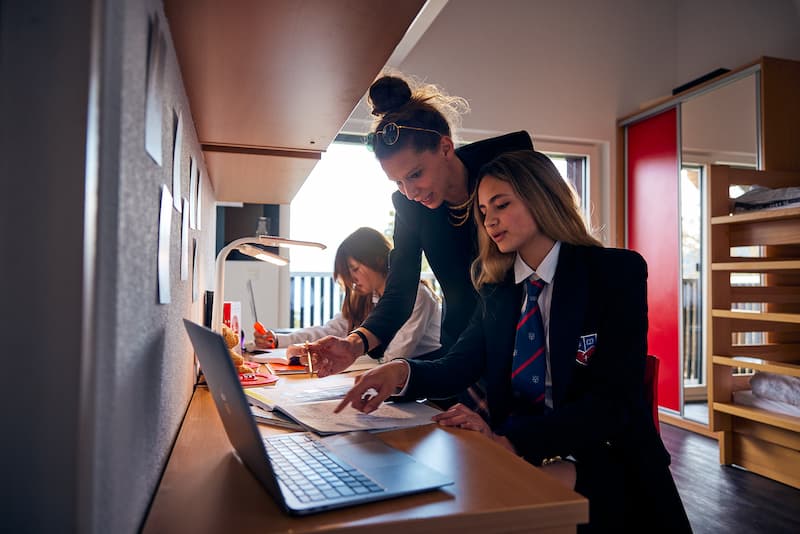
One of the most important responsibilities of pastoral staff is understanding the difference between a situation that requires adult intervention and one in which a student may benefit from supported independence. At La Garenne, we use the principle of “connect before correct”. This means understanding the student and the reasons behind their behaviour before deciding how best to respond. A child who appears frustrated may be tired, homesick, overwhelmed or unsure how to express a concern. Taking time to understand what is happening allows staff to offer more appropriate guidance.
For example, when a student experiences a friendship disagreement, a houseparent might encourage them to consider questions such as:
- What do you think led to the disagreement?
- How might the other person be feeling?
- What could you do to improve the situation?
- Would you like support in having that conversation?
These questions encourage reflection without removing the student’s responsibility for finding a way forward.
However, independence must never come at the expense of safety. Bullying, safeguarding concerns, serious emotional distress and situations involving harm require appropriate adult intervention. Good pastoral care means exercising sound judgement, maintaining clear boundaries and ensuring that every student knows where to turn for support.
How Does Independence Develop at Different Ages?

Children do not become independent overnight. They gradually develop new skills and responsibilities, with the appropriate level of adult guidance changing as they grow.
Primary School: Building Confidence Through Small Responsibilities
For younger children, independence often begins with simple daily routines.
Learning to organise personal belongings, look after a bedroom or contribute to shared activities can help children develop confidence and a sense of achievement.
Adults remain closely involved, offering encouragement and reassurance while allowing children to practise doing things for themselves.
Middle School: Learning to Make Decisions
As children grow older, their social relationships and academic responsibilities become more complex.
Middle school students can begin taking greater ownership of homework, organising their time and working through everyday friendship challenges.
They still need clear expectations and accessible adult support, but they also benefit from opportunities to make decisions and reflect on their outcomes.
High School: Preparing for Life Beyond School
Older students face increasing demands as they balance academic commitments, extracurricular interests, friendships and preparations for their futures.
At this stage, pastoral care should encourage greater autonomy and personal accountability.
Taking on leadership responsibilities, managing commitments and learning to make thoughtful decisions can prepare students for university and adult life.
The progression is individual. Some students may be ready for certain responsibilities sooner than others, which is why personal relationships and an understanding of each child’s needs remain essential.
Why Does a Sense of Belonging Matter?
Independence develops most effectively when children feel secure enough to take appropriate risks, ask questions and learn from mistakes. A student who trusts the adults around them is often better placed to accept guidance, receive constructive feedback and speak openly about difficulties. This is one reason why the relationships between students and houseparents are central to the boarding experience.
In a close-knit environment, everyday interactions offer opportunities to understand students beyond their academic performance. Staff may notice changes in mood, recognise when someone needs encouragement or identify when additional support would be beneficial. Feeling known and valued creates the foundation for personal growth. A supportive boarding environment should therefore offer both warmth and appropriate challenge. Students need to know that help is available without feeling that every decision will be made for them.

What Does Pastoral Care Look Like at La Garenne?
At La Garenne International School, pastoral care forms part of daily life across our boarding houses and wider school community. Our houseparents and boarding staff provide continuity throughout the day, supporting students with daily routines, friendships, academic commitments and their emotional wellbeing.
As a family-run school, we place particular value on close relationships and individual attention. Understanding each student’s personality, experiences and stage of development helps us respond appropriately to their needs. Our approach combines clear expectations with opportunities for increasing responsibility. For some students, this might involve becoming more confident in organising their belongings and following daily routines. For others, it may mean learning to manage competing commitments or reflecting on how to resolve a disagreement.
We also recognise that students occasionally need additional reassurance or specialist support. Our wider pastoral provision includes wellbeing and counselling support, ensuring that independence is developed within an environment where care remains accessible. The objective is not simply to make boarding life comfortable. It is to create a secure community in which young people can experience challenges, develop resilience and gradually discover what they are capable of achieving.
What Should Parents Look for in a Boarding School’s Pastoral Care?
When visiting a boarding school, parents understandably ask about safety, supervision and how the school responds when a child is upset or homesick. These questions are important, but there are other aspects worth exploring.
Parents might also ask:
- How well do houseparents get to know individual students? Strong relationships help staff recognise different needs and respond personally.
- How are friendship difficulties handled? Does the school help students develop communication and conflict-resolution skills?
- How does responsibility change with age? Are older students encouraged to develop independence while retaining appropriate guidance?
- What happens when a student is struggling? Is there a clear system for identifying concerns and providing additional support?
- How are families kept informed? Communication between school and home helps maintain consistency and reassurance.
The answers can reveal how a school’s pastoral philosophy is reflected in everyday practice.
The Lasting Value of Good Pastoral Care
The most valuable outcomes of boarding education are not always immediately visible. They may appear when a student resolves a disagreement respectfully, takes responsibility for a mistake, manages a difficult week or confidently asks for help when they need it. These everyday moments contribute to the development of confidence, self-awareness, resilience and emotional maturity.
Effective pastoral care must offer reassurance without creating dependence, and encouragement without removing responsibility.
For educators and parents alike, the challenge is to provide young people with a secure foundation while allowing them the space to grow.
Discover more about La Garenne
Learn about our boarding life and wellbeing provision, or explore our article on what makes a boarding school in Switzerland distinctive.
This article develops the themes discussed by Gavin Williams in his piece for TES, “Why caring for boarding pupils sometimes means stepping back”, published on 10 November 2026.
Key Takeaways
- Pastoral care in boarding schools supports students’ emotional, social, and personal wellbeing while fostering independence.
- Independence is crucial; it helps students handle challenges and learn decision-making skills under guidance.
- Effective pastoral staff balance intervention and independence, using the principle of ‘connect before correct’ to understand each student’s needs.
- Parents should explore how well boarding schools know their students and how they handle friendship issues and responsibility development.
- Good pastoral care leads to long-term benefits, including resilience, confidence, and emotional maturity in students.