
Estimated reading time: 9 minutes
Learning to think, not just what to think – the power of the Harkness MethodTM
In a world of constant information, critical thinking is essential. Students must navigate complexity, assess information, and engage confidently with their environment. At La Garenne, innovative teaching shapes our learning. The Harkness Method™, a student-led approach, transforms classrooms into centers of dialogue and critical thinking. In an educational environment where information is readily available, the ability to question, interpret and discuss ideas is increasingly valuable. Students need opportunities to develop their own understanding rather than simply reproduce what they have been taught. At La Garenne, this reflects our wider belief that education should nurture independent thinkers who are confident in their abilities while remaining open to the perspectives of others.
The Harkness Method™ provides a practical setting for this philosophy. By encouraging meaningful conversations between students, it places human interaction at the centre of learning and allows young people to develop their reasoning, communication and confidence through active participation.
What is the Harkness MethodTM?
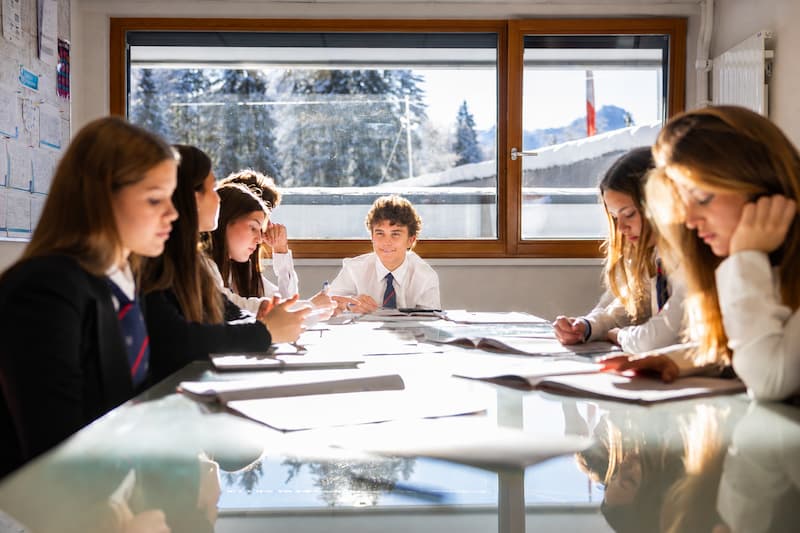
In a Harkness classroom at La Garenne, students sit together around an oval table, facing one another rather than in rows. This seating plan embodies the belief that learning is created collectively through discussion, questioning, and reflection, rather than delivered by a teacher. The Harkness MethodTM – developed at Phillips Exeter Academy in 1930 – is based on the Socratic tradition, where understanding develops through guided questioning instead of passive instruction. The arrangement of the classroom plays an important role in creating this learning environment. Sitting around a shared table allows students to see one another, recognise different perspectives and engage directly with the ideas being discussed. Rather than directing every contribution towards the teacher, students learn to communicate with their classmates and take greater responsibility for the conversation.
This approach also encourages students to recognise that understanding can develop through disagreement and careful questioning. A thoughtful challenge to an idea is not necessarily a rejection of another person’s opinion. Instead, it can become an opportunity to examine assumptions, consider evidence and reach a more informed conclusion. A common understanding in education is that students build stronger reasoning and communication skills by articulating ideas and responding to others’ perspectives. With classes of 14 or fewer in La Garenne, every student’s voice is heard. Teachers facilitate discussions, encouraging participation, collaboration and a deeper exploration of ideas rather than focusing solely on obtaining the ‘right answer.’
Small classes create opportunities for teachers to understand how individual students participate and develop their ideas. Some young people may feel confident speaking immediately, while others prefer to listen carefully before contributing. Recognising these differences allows teachers to encourage participation in ways that support each student’s confidence and development. At La Garenne, individual attention is an important part of our educational approach. The Harkness Method™ complements this philosophy by creating space for different voices, encouraging students to recognise their strengths and helping them develop the confidence to contribute meaningfully to shared learning.
Learning in Action
A Harkness lesson begins before students enter the classroom. They arrive prepared, having read, researched, or reflected on a key question. Conversations develop naturally, guided by curiosity and collaboration with peers, rather than a predetermined script. This reflects the belief, championed by educational thinker John Dewey, that learning is most powerful when students actively participate in constructing knowledge rather than passively receiving information.
Preparation is an essential part of a successful Harkness discussion. Students are encouraged to arrive with an understanding of the topic, questions they would like to explore and ideas they are ready to share. This process helps them develop independence and take greater ownership of their learning. Once the discussion begins, the direction of the conversation may change as students introduce different interpretations or raise unexpected questions. Learning to respond thoughtfully in these moments encourages flexibility and active listening. It also reminds students that meaningful understanding often develops through exploration rather than following a predetermined route to an answer.
Some lessons involve structured debates, while others address ethical or social questions. One student explained how even when they don’t contribute as much as the others in a typical lesson, they still feel more involved in the conversation during these debates, sharing, “I might not speak as much as the others but participating in Harkness discussions and listening to different perspective helps me understand the main ideas more clearly and see arguments that I wouldn’t have thought of on my own”. This reflection highlights an important aspect of collaborative learning: participation is not measured only by how frequently someone speaks. Listening carefully, considering another perspective and connecting different ideas are also valuable contributions to the learning process.
For students who are naturally quieter, the Harkness table can provide opportunities to develop confidence gradually. Hearing classmates explore different viewpoints may help them clarify their own thinking and feel more comfortable contributing when they have something meaningful to add. Another student described how these discussions have changed their relationship with learning itself, sharing, “The debates and Harkness conversations are the parts of class I look forward to most. It feels like we’re helping each other learn as a class.” This sense of shared responsibility is central to the Harkness approach. Students begin to understand that their contributions can help others develop new ideas, just as listening to their classmates can deepen their own understanding. The classroom becomes a community of learners in which curiosity and mutual respect support academic progress.
Building Critical Thinkers
The Harkness MethodTM helps students develop skills that go beyond the classroom. Through dialogue, they learn to evaluate evidence and communicate ideas articulately and respectfully. At the Harkness table, learning is a shared process where ideas are tested, refined, and strengthened through collaboration rather than competition. The supportive atmosphere is a standout feature of these lessons, creating a culture of curiosity, empathy and open-mindedness, underpinned by active participation.
Developing critical thinking involves more than expressing an opinion. Students must learn to explain why they hold a particular view, consider the quality of the evidence available and recognise when new information challenges their assumptions. These habits encourage intellectual independence while helping young people remain open to learning from others. The Harkness Method™ offers opportunities to practise these skills through regular dialogue. Students may encounter perspectives that differ from their own, requiring them to listen carefully and respond with respect. Over time, such experiences can help them become more thoughtful communicators who are comfortable engaging with complex questions.
This combination of confidence and open-mindedness reflects an important part of La Garenne’s educational philosophy. We want students to develop their individual abilities while understanding the value of collaboration, empathy and meaningful relationships.
The Value of Human Connection
We believe that education is fundamentally a human experience. Technology can provide useful tools for accessing information and supporting learning, but the ability to communicate, listen and build relationships remains essential.
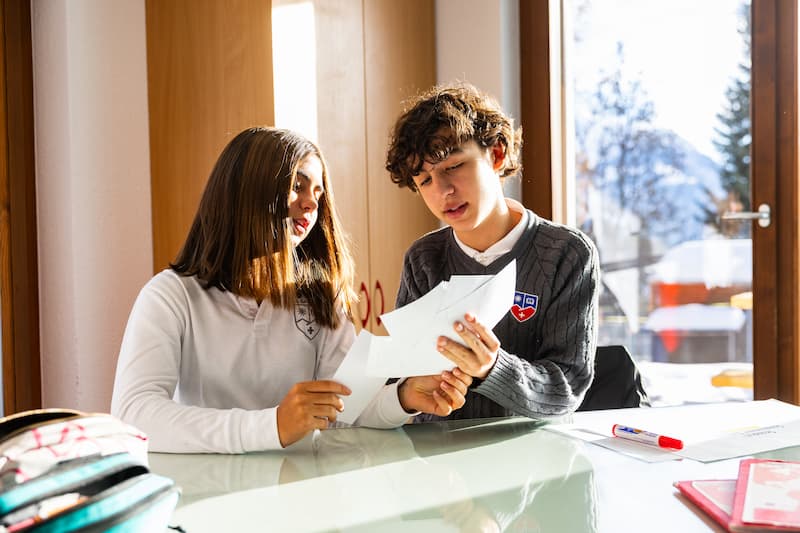
The Harkness Method™ places these interactions at the heart of the classroom. Students learn not only from the material they study but also from the questions, experiences and interpretations shared by their peers. This creates opportunities to develop a deeper appreciation of different perspectives and the importance of respectful dialogue.
For an international school community, these experiences can be particularly meaningful. Students bring different cultural backgrounds, languages and personal experiences to their discussions. When these perspectives are welcomed and explored thoughtfully, they can enrich the learning experience for everyone. The confidence to participate in a conversation also contributes to a sense of belonging. When young people feel that their ideas are valued, they are more likely to engage actively with their learning and recognise their place within the wider school community.
Developing Independence Through Discussion
One of the most valuable outcomes of student-led learning is the gradual development of independence. Rather than relying entirely on the teacher to provide answers, students are encouraged to investigate ideas, formulate questions and take responsibility for their understanding.
This does not mean that teachers become less important. Their role changes from delivering information to guiding a learning process in which students play a more active part. Through careful questioning and observation, teachers can encourage deeper thinking while helping students remain focused and engaged.
The ability to take ownership of learning is especially important as students progress towards higher education. University study often requires independent reading, research and discussion, as well as the confidence to evaluate competing ideas. Developing these habits during secondary school can help young people approach future academic challenges with greater assurance. Independence also involves recognising when to seek guidance. Students benefit from understanding that asking a thoughtful question or reconsidering an initial opinion can demonstrate intellectual maturity rather than uncertainty. These habits contribute to a more reflective and adaptable approach to learning.
Conclusion
These are the skills students carry into university seminars, the workplace, and civic life: contributing thoughtfully, successfully engaging in teamwork, and navigating the world with confidence and care. At La Garenne, students do more than memorise answers. They learn to ask better questions, think independently, and move towards genuine understanding.
At its heart, the Harkness Method™ reflects our commitment to developing young people who are curious, thoughtful and confident in their ability to contribute. By combining individual attention with meaningful discussion, we aim to create an environment where students feel encouraged to explore ideas, challenge assumptions and learn from one another. The skills developed around the Harkness table extend far beyond academic study. Listening with empathy, communicating clearly and approaching unfamiliar questions with an open mind can help students navigate future challenges and build positive relationships throughout their lives.
Through this approach, we hope to nurture not only capable learners but also independent individuals who understand the value of their own voice and the importance of listening to others.
Key Takeaways
- The Harkness Method™ encourages critical thinking through student-led discussions and collaboration around an oval table.
- Students prepare key questions in advance, promoting active participation and knowledge construction instead of passive learning.
- This approach helps students develop communication and reasoning skills while fostering curiosity, empathy, and open-mindedness.
- The supportive environment enhances learning, enabling students to evaluate evidence and share ideas respectfully.
- Ultimately, La Garenne equips students with skills for university, the workplace, and civic life, teaching them to ask better questions and think independently.