
Rethinking What Success Looks Like in Education.
Estimated reading time: 6 minutes
As educators, we are naturally pleased when students achieve strong academic results. At La Garenne, our recent IB Diploma cohort achieved an average of 36 points and a 100% pass rate, outcomes of which we are very proud. They reflect the commitment of our students, the expertise of our teachers and the strength of the learning culture across the school.
Progress as the Primary Measure of Success
Yet, when I speak with students and parents, I often return to a distinction which sits at the heart of our educational philosophy: our primary focus is on progress, with attainment being the positive side effect.
This is not to diminish the importance of attainment. Grades matter, examinations matter and qualifications open doors. What I believe matters even more, however, is understanding the journey that lies behind those outcomes. Academic attainment tells us where a student has arrived at a particular moment in time; progress tells us how far they have travelled, how they have responded to challenge and how they are developing as a learner and as a person.
Two students may ultimately achieve the same grade, but their journeys towards that grade can be entirely different. One may have found the subject relatively straightforward, while another may have needed to overcome uncertainty, build confidence, develop stronger habits and learn to persevere when success did not come immediately. In both cases the final result matters, but it does not tell the whole story.
Looking Beyond Academic Outcomes
This is one of the reasons I find Yong Zhao’s arguments in What Works May Hurt so thought-provoking. Zhao challenges educators to look beyond the intended outcome of an educational intervention and to consider the possible side effects that accompany it. An approach may succeed according to one measure while inadvertently undermining something else that is equally important. His wider argument is that education should not be reduced to a simple question of whether something “works”; we must also ask what it may cost.
That question is particularly relevant in schools which rightly aspire to high academic standards. We want our students to achieve excellent results, but we do not want achievement to come at the expense of curiosity, confidence, independence, wellbeing or a genuine love of learning. A system that raises examination scores while narrowing a young person’s sense of possibility would, in my view, represent a very limited definition of success.
A Holistic Approach to Progress
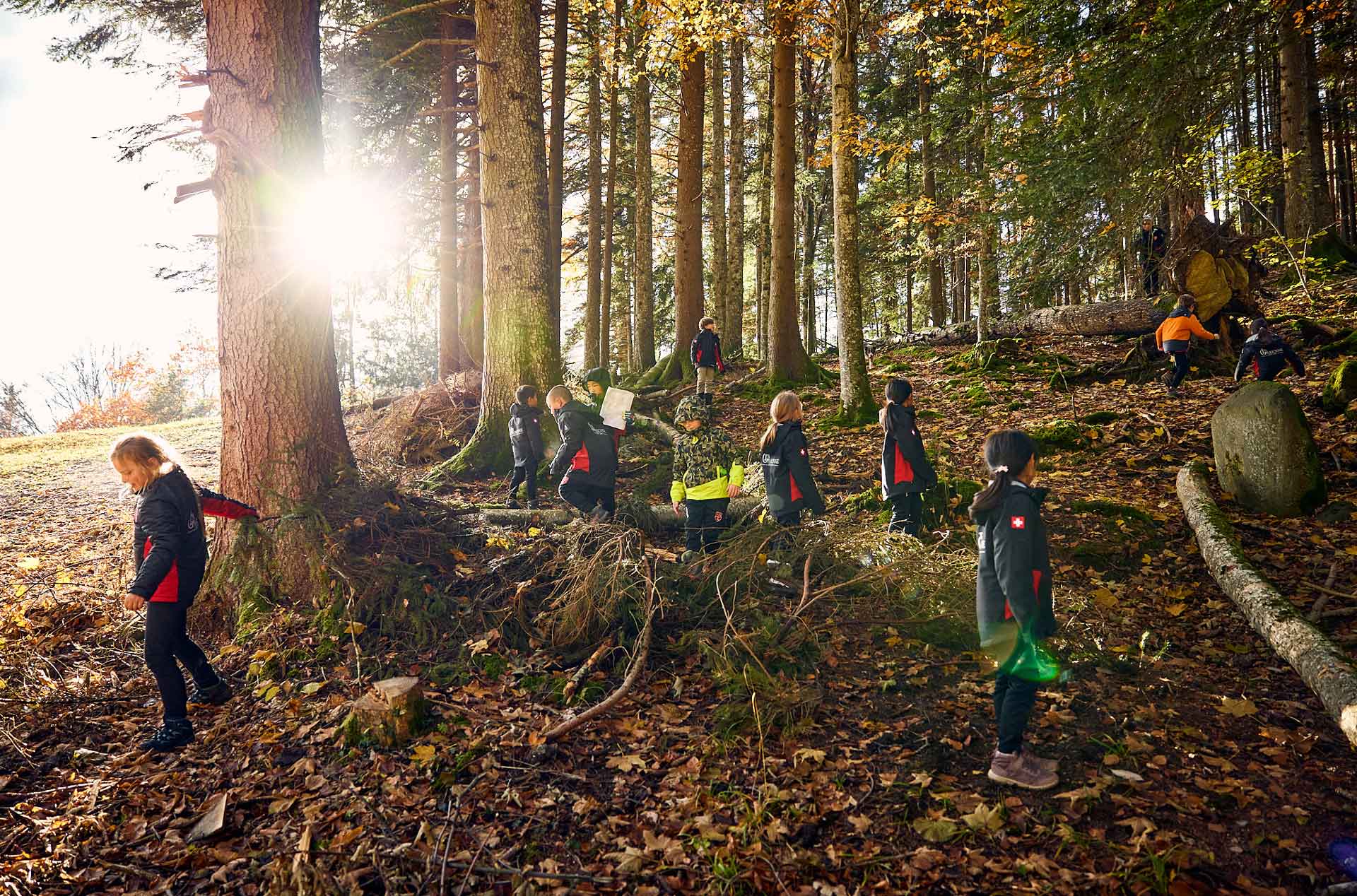
At La Garenne, our curriculum is designed around a broader understanding of development. In Primary, students follow a bespoke curriculum drawing on the English National Curriculum and the International Primary Curriculum, complemented by Forest School experiences that encourage curiosity, independence, confidence and a strong connection with the natural environment. Together, these elements allow us to combine academic rigour with enquiry, creativity and meaningful learning beyond the classroom.
From there, students progress through three years of the Middle Years Programme, followed by IGCSE and then, in the senior years, pathways through either the IB Diploma Programme or the High School Diploma. Alongside this academic journey, Expeditions form an important part of the curriculum, providing further opportunities for students to develop resilience, teamwork, leadership and confidence in environments which cannot be replicated in a classroom.
These different stages and experiences are not separate from our academic ambitions. They are part of the same educational journey. They allow us to understand our students more fully, to recognise different strengths and needs, and to create pathways which are sufficiently ambitious while remaining appropriate to the individual.
Personalising the Learning Journey
Personalisation, therefore, is not about lowering expectations. It is about making progress meaningful.
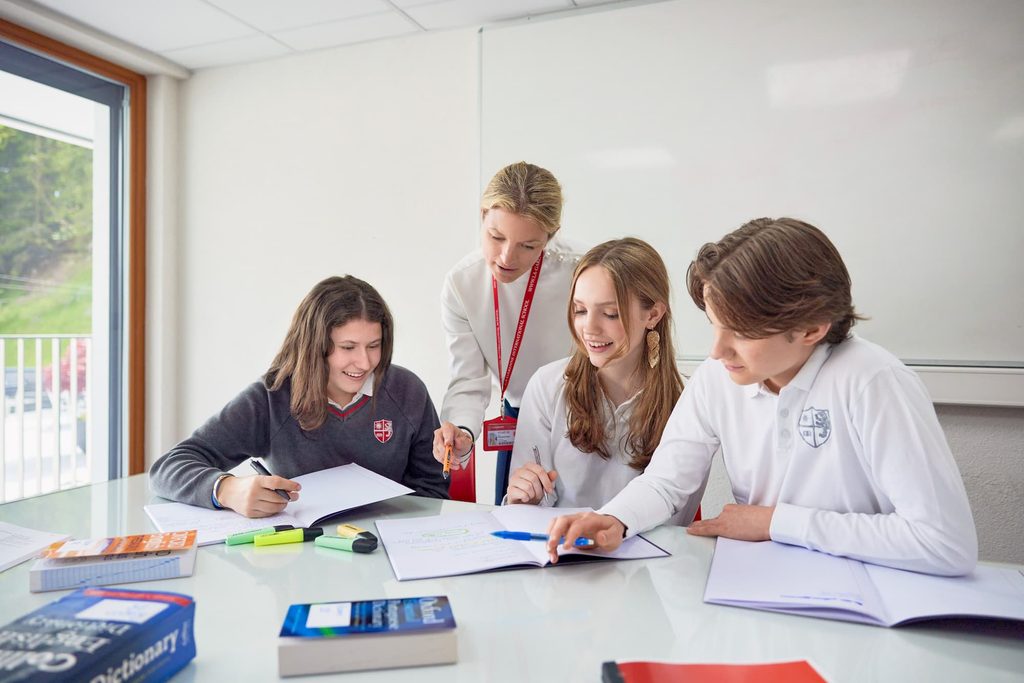
A student should be able to look back over a term, a year or several years and recognise that something has changed. They may be writing with greater sophistication, solving more demanding problems or performing more strongly in examinations, but they may also have become more independent, more willing to contribute, more resilient when faced with difficulty or more thoughtful in the way they engage with others.
This is what I mean when I speak about developing a performance culture. It is not a culture defined only by comparison with others, nor one in which success belongs solely to those achieving the highest grades. It is a culture in which every student is encouraged to ask whether they are better today than they were yesterday, and to understand what they need to do in order to continue improving tomorrow.
Building a Culture of Progress
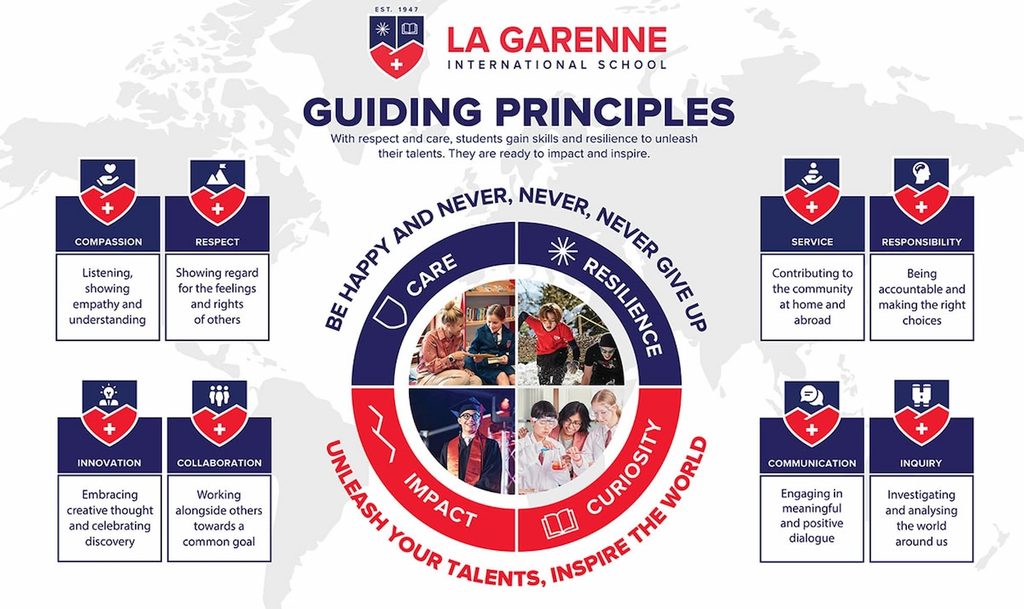
Our guiding principles of care, resilience, impact and curiosity are closely connected to this idea. Care allows students to feel known and supported. Resilience helps them to respond constructively when learning becomes difficult. Curiosity keeps them open to challenge, new ideas and unfamiliar experiences. Impact reminds them that education is not solely about personal achievement, but also about how they contribute to the communities around them.
Seen in this way, academic attainment becomes part of a much richer picture.
Our recent IB results are important because they show that a personalised and holistic approach can coexist with academic excellence. This year, that achievement was also reflected externally, with La Garenne ranked second among Swiss boarding schools offering the IB Diploma in Top School Guide’s 2026 ranking, based on average IB points achieved. Indeed, I would argue that personalisation and academic excellence should reinforce one another. When students feel understood, when they can see evidence of their own progress and when they are challenged appropriately, they are more likely to engage deeply with their learning and perform at a high level.
The role of a school, then, is not simply to produce excellent examination results. It is to help young people become increasingly capable, confident, reflective and independent. If we achieve that, strong academic outcomes will often follow.
More importantly, students will leave school with something that lasts beyond any examination result: an understanding that progress is not a destination, but a habit.
Key Takeaways
- Rethinking success in education requires a focus on progress rather than just academic attainment.
- At La Garenne, a holistic curriculum promotes curiosity, confidence, and meaningful learning beyond traditional assessments.
- Personalisation in education supports individual growth while maintaining high expectations for achievement.
- Students should recognise their progress in various areas, including academic skills and personal development.
- Strong academic results often follow when students feel understood and engaged in their learning journey.
More to read
- Why solving hard Physics problems is good for your brain
 Several scientific studies have found that regularly solving Physics problems changes the structure of your brain, forming new neural connections via a phenomenon known as neuroplasticity. These connections help to improve the overall function of the brain,… Read more: Why solving hard Physics problems is good for your brain
 - What to Bring on an Expedition?Preparing for Outdoor Adventures at La Garenne Outdoor activities and overnight expeditions take place every term across all year groups at La Garenne. Bringing the correct kit is an important part of staying safe and comfortable, while… Read more: What to Bring on an Expedition?
- Why Conceptual Understanding Matters in the Mathematics ClassroomLearning and teaching mathematics is not an easy task. No matter where you are in the world, mathematics can challenge students, teachers, and families alike. Teaching mathematics is rewarding everywhere, but in an international school setting, there… Read more: Why Conceptual Understanding Matters in the Mathematics Classroom
- Progress Before AttainmentRethinking What Success Looks Like in Education. As educators, we are naturally pleased when students achieve strong academic results. At La Garenne, our recent IB Diploma cohort achieved an average of 36 points and a 100% pass… Read more: Progress Before Attainment
- Why Reading Matters
 The lifelong benefits of reading for teenagers in school and beyond. In an age dominated by screens, short-form content and constant digital distraction, reading may appear to be losing ground among teenagers. Yet within leading international schools… Read more: Why Reading Matters
 - What Is Primary School?
 Understanding a Child’s Early Education Primary school is a vital stage in a child’s development. It is during these years that curiosity grows, confidence builds and the foundations for future learning are established. For families considering a… Read more: What Is Primary School?
 - IBDP vs High School DiplomaWhat’s the Difference? Two Pathways, One Goal: Finding the Right Fit for Every Learner At La Garenne, education is not one-size-fits-all. Every student has different strengths, ambitions and ways of learning. For students aged 16 to 18,… Read more: IBDP vs High School Diploma
- The importance of language developmentHow Language Supports Learning, Well-being and Belonging In an international school setting, language is more than just a subject on the timetable. It is the foundation upon which learning, well-being, belonging, identity and connection are built. Language… Read more: The importance of language development
- Beyond the Canvas
 How Visual Arts Connect the Whole Curriculum Visual Arts is often viewed as a standalone creative subject, separate from core academic learning. At La Garenne, we see it differently. In our primary art room, students are not… Read more: Beyond the Canvas
 - Tips for Choosing the Right SchoolWhat Families Should Ask When Choosing a School When parents navigate the web, they believe that choosing the right school comes down to academic results, facilities and pastoral care. It doesn’t. The real test begins after the… Read more: Tips for Choosing the Right School