
Estimated reading time: 9 minutes
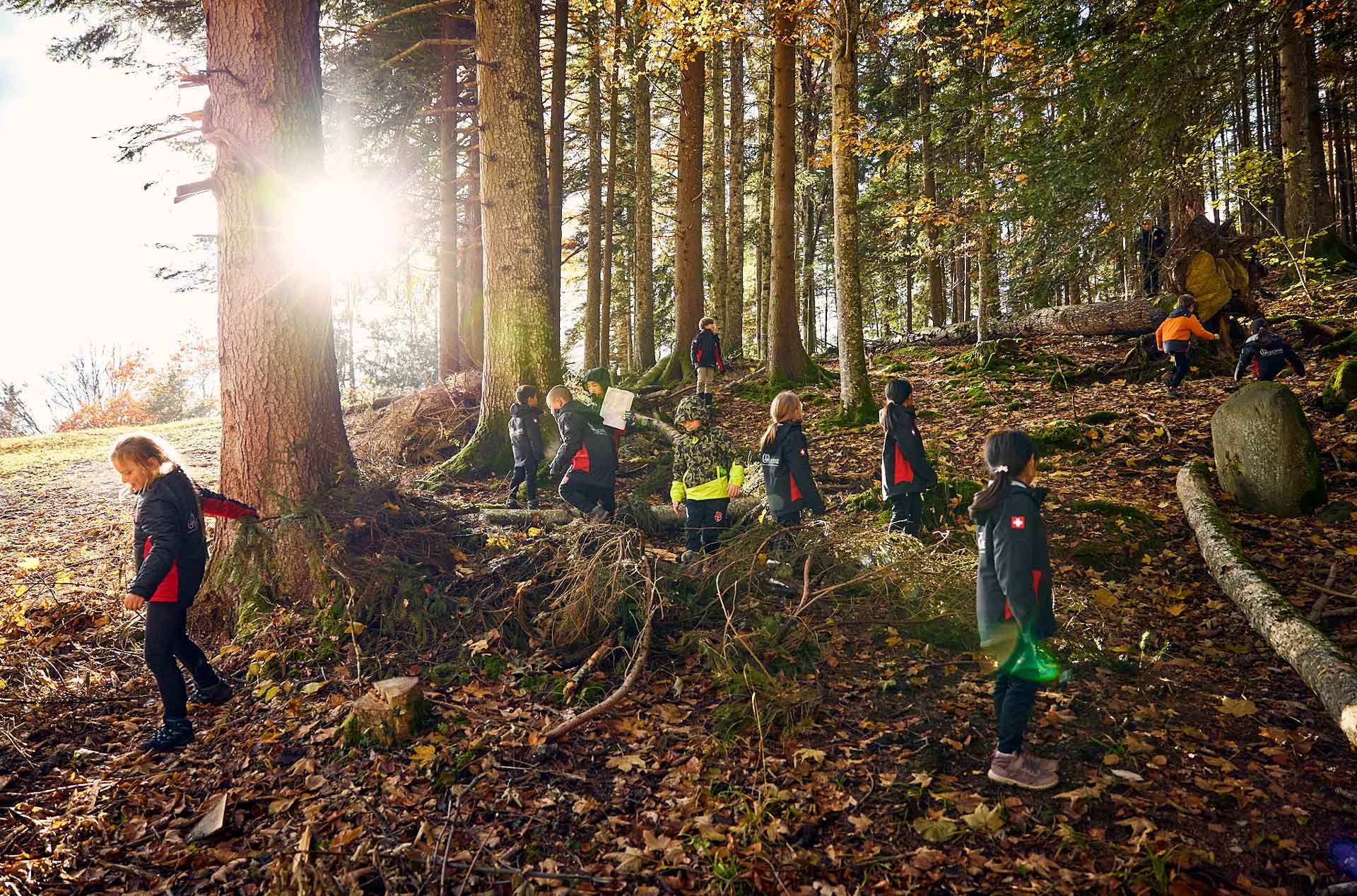
There is something remarkably similar about facing a challenging mathematics problem and standing halfway up a climbing route, wondering how to make the next move.
In both situations, you might know where you want to go, but you cannot quite see how to get there. You try something. It does not work. You reconsider, change your approach, and try again. Sometimes progress comes quickly; sometimes you spend what feels like an eternity working through the same difficulty. And sometimes, just when you think you have run out of ideas, you discover a way forward.
As a mathematics teacher, I have come to realise that some of the most important lessons mathematics teaches us have little to do with numbers and formulas. They are about perseverance, resilience, and the courage to keep going when the answer is not yet in sight.
Learning to be uncomfortable
We live in a world where almost everything happens instantly. Messages arrive in seconds, answers are a quick search away, and notifications compete constantly for our attention. Against this background, asking a student to spend thirty minutes struggling with a mathematical problem can feel almost unreasonable. Why persist when the answer is not coming? Why tolerate frustration when someone could simply explain the solution?
Yet this struggle is precisely where some of the most important learning takes place.
Mathematics is not only about arriving at the correct answer. It is about learning to think when the answer is not obvious, recognising when an approach has failed, and having the patience to try something different. A student who solves a problem immediately has achieved something valuable. But a student who struggles, makes mistakes, starts again, and eventually finds a solution has developed something equally important: the ability to navigate difficulty.
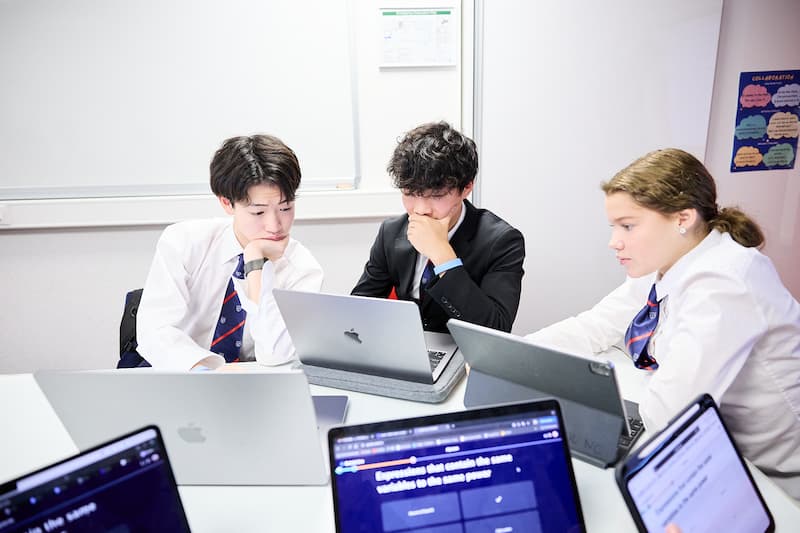
A Year 11 student recently struggled with a problem involving the equation of a line within a more complex geometry question. Frustration was building, and the student was close to giving up. Rather than stepping in with a solution, I encouraged them to explore the geometry, carefully pointing towards ideas worth developing and offering small hints without taking away the challenge. Knowing when to step in and when to allow a student more time to struggle is part of the art of teaching; there is no perfect formula, and what works for one student, or even the same student on another day, may be different. Staying enthusiastic, sharing our own struggles and celebrating the eventual breakthrough can make all the difference. The sense of achievement that comes from finding a solution independently is often more valuable than the answer itself, because it gives students the confidence to face the next challenge.
This is where mathematics and adventure sports have so much in common. Anyone who has spent time climbing knows that the next move is not always obvious. You may be tired, uncertain, and unable to see a clear route to the top. You have a choice: interpret the uncertainty as a sign that you cannot do it, or focus on finding the next hold.
You do not need to know every move in advance. You need to find the next one.
Mathematics works in much the same way. When a problem seems overwhelming, students often want to see the entire solution before they begin. If they cannot immediately identify the route to the answer, they may conclude that they are not capable of solving it. But mathematical thinking rarely works like that. We start with what we know, test an idea, learn from what does not work, and try another approach.
The ability to tolerate not knowing is not a barrier to learning mathematics. It is one of the conditions that makes learning possible.
Resilience is built through practice
In endurance sports, nobody expects to complete a marathon or climb a demanding mountain route without preparation. Progress comes through repetition, gradually increasing the difficulty, learning from mistakes, and returning to training even when the previous session was uncomfortable. Mathematics is no different. Fluency develops through practice, confidence grows through experience, and the ability to solve complex problems develops as students encounter unfamiliar situations and learn to persevere.
Of course, discomfort alone does not guarantee progress. Students need guidance, feedback, appropriate challenges, and time to reflect. But they also need opportunities to experience difficulty without immediately being rescued from it.
How can parents help without giving the answer?
As teachers and parents, we naturally want to make things easier. We explain the next step, offer reassurance, or provide the answer when frustration grows. Support is essential, but there is a difference between helping a student overcome a challenge and removing the challenge altogether. Sometimes, the most helpful thing we can do is remain beside them while they work through it. We can ask another question rather than provide the answer, encourage them to reconsider an approach, or simply give them time.
As a maths teacher, I can ask specific questions that help a student reconsider an approach or explore a mathematical idea. As a parent, a simple question such as “What is the problem about? Can you explain to me what is going on?” can be surprisingly powerful. When students try to explain a problem in their own words, they often begin to organise their thoughts, recognise connections and identify possible next steps. Sometimes, returning to the original question is enough. Students may have read it too quickly and missed a small but crucial piece of information that changes everything.
When will I ever use this?
One of the most common questions I hear from students is, “When will I ever use the cosine rule in real life?” Trigonometry, in particular, seems to offer endless opportunities for the less enthusiastic maths learner to question the point of mathematics. And honestly, I sometimes think: perhaps you will never need to use the cosine rule again. But that is not the point!
The point is that you were presented with a seemingly confusing collection of mathematical ideas, made sense of them, and eventually solved a problem that meant very little to you when you first read it. You worked through the uncertainty, figured out what information mattered, and found a way forward. To me, that is resilience. Mathematics is the vehicle; learning to make sense of something unfamiliar is the real achievement.
Having said that, you never quite know when those mathematical skills might come in handy! I will never forget a friend telling me how she used the cosine function to work out the angle she needed to cut a large piece of tarpaulin so that it would fit perfectly over her uniquely shaped outdoor car shelter. So perhaps there is a real-life use for trigonometry after all! And when nobody is watching, a little help from trigonometry might be exactly what you need.
What does “I can’t do this” really mean?
When a student says, “I can’t do this,” I often wonder whether what they really mean is, “I can’t do this yet, and I don’t like how that feels.” There is an important difference. The first statement closes a door; the second leaves it open.
Our role is not to convince students that every problem is easy. It is to help them understand that difficulty is a normal part of learning. Sometimes the next step is to persevere; sometimes it is to pause, recover, and return with a fresh perspective. Learning to recognise the difference is part of resilience.
What if not every student is ready to try?
There is another lesson that both teaching and adventure sports have taught me: we cannot control every outcome.
As teachers, we invest time, energy, and dedication in our students. We hope every student will embrace the challenge and recognise the value of the effort being invested in them. But that does not always happen. Not every student will be ready to persist, and not everyone will choose to take the next step. Despite our best efforts, we will not always see the progress we hoped for. This can be difficult to accept when we care deeply about our work.
I taught a student who would give up almost every time a mathematical problem became difficult. The moment they could not see a way forward, they would disengage, convinced that there was no point in trying. One day, after declaring that they were completely done with mathematics, they surprised me by asking for help one more time. It was a small moment, but it stayed with me. The problem had not suddenly become easier, and the student had not magically acquired the solution. Yet, somewhere between the frustration and the decision to ask for help, something had shifted. They were willing to try again, even without knowing whether they would succeed. Perhaps this student will not pursue mathematics further, but that was not the point. For me, that willingness to take one more step was an achievement in itself. Learning to say, “I cannot see the solution yet, but I am willing to keep looking,” is a lesson that reaches far beyond mathematics.
Yet I keep returning to one simple thought: you do not have to impact every student to make a meaningful difference. If you help even one student discover that they are capable of more than they believed, your time and dedication have been worthwhile.
Perhaps that student finally attempts a problem they would previously have avoided. Perhaps they learn to respond to disappointment with determination rather than defeat. Perhaps they discover a passion for mathematics through an unexpected success.
We may never know the full impact of a conversation, a carefully chosen question, or a moment when we encouraged a student to try one more time. But that does not make the effort any less valuable.
As a mathematics teacher, I want my students to leave my classroom with more than mathematical knowledge. I want them to develop the confidence to face unfamiliar situations, the patience to work through difficulties, and the resilience to begin again when their first attempt fails. I want them to understand that they do not need to see the entire route before taking the first step. They need to be willing to make the next move.
Because in mathematics, as in climbing and endurance sports, the real achievement is not simply getting to the top. It is becoming the person who is willing to keep going.
Key Takeaways
- Facing challenging math problems teaches perseverance and resilience, much like climbing routes.
- Students learn valuable lessons by struggling with problems, which helps them develop problem-solving skills.
- Parents and teachers should support students through difficulty without providing immediate answers.
- We must help students understand that difficulty is a normal part of learning, encouraging them to try again.
- Valuable achievements in math go beyond answers; they include building confidence and resilience to face future challenges.