
This February, for a second year in a row, our students had the exciting opportunity to participate in the ISMTF Maths Competition organised by the International Schools Mathematics Teachers Foundation, and what a journey it turned out to be. At La Garenne International School, we believe that academic learning becomes especially meaningful when students have opportunities to apply their knowledge beyond the classroom. Mathematics competitions offer a wonderful example of this approach, encouraging young people to think independently, collaborate with others and approach unfamiliar problems with curiosity. They also provide opportunities for students who enjoy mathematics to explore their interests in greater depth and discover what they are capable of achieving. Participating in an international competition is about much more than finding the correct answer. It involves preparation, concentration, adaptability and the confidence to test ideas in a new environment. For our students, travelling to Vienna was an opportunity to experience these challenges while representing their school and connecting with other young mathematicians.
The Journey to Vienna
Our adventure began before sunrise, leaving Villars at 6 a.m., full of curiosity. At the airport, however, the suspense quickly mounted: our flight was delayed, and news arrived that Vienna was covered in snow, with many flights cancelled. Messages circulated that the competition itself might be called off. As we were boarding, another update confirmed the competition is on. The students’ reaction said everything: care and determination. Nothing was going to stop them. Even before the mathematical challenges began, our students were learning valuable lessons about perseverance and flexibility. Unexpected changes to travel plans can be frustrating, particularly when everyone is looking forward to an important event. Yet these moments also provide opportunities to practise patience, remain focused on a shared goal and support one another when circumstances are beyond our control.
We recognise that resilience develops through experience. Young people gain confidence not only when everything goes according to plan, but also when they discover that they can respond positively to uncertainty. The journey to Vienna offered a memorable example of this philosophy, reminding students that challenges can become opportunities for personal growth.
After landing safely, we faced yet another obstacle when our train broke down midway. Still, the students showed no frustration, only positivity and unwavering motivation. The spirit of La Garenne International School shone brightly: resilience, teamwork, and the belief that challenges are simply problems waiting to be solved. This positive attitude reflects an important part of our school culture. We encourage students to approach difficulties with curiosity rather than hesitation, recognising that there is often more than one way to reach a solution. In mathematics, this might mean testing a different strategy or reconsidering an assumption. During a journey, it may simply mean remaining patient and working together when plans change.
The experience also highlighted the importance of relationships within our school community. Travelling together creates opportunities for students to encourage one another, share responsibilities and develop friendships beyond their usual classroom routines. These shared moments can strengthen a sense of belonging and remind young people that individual achievement is often supported by the people around them.
Putting Mathematical Skills to the Test
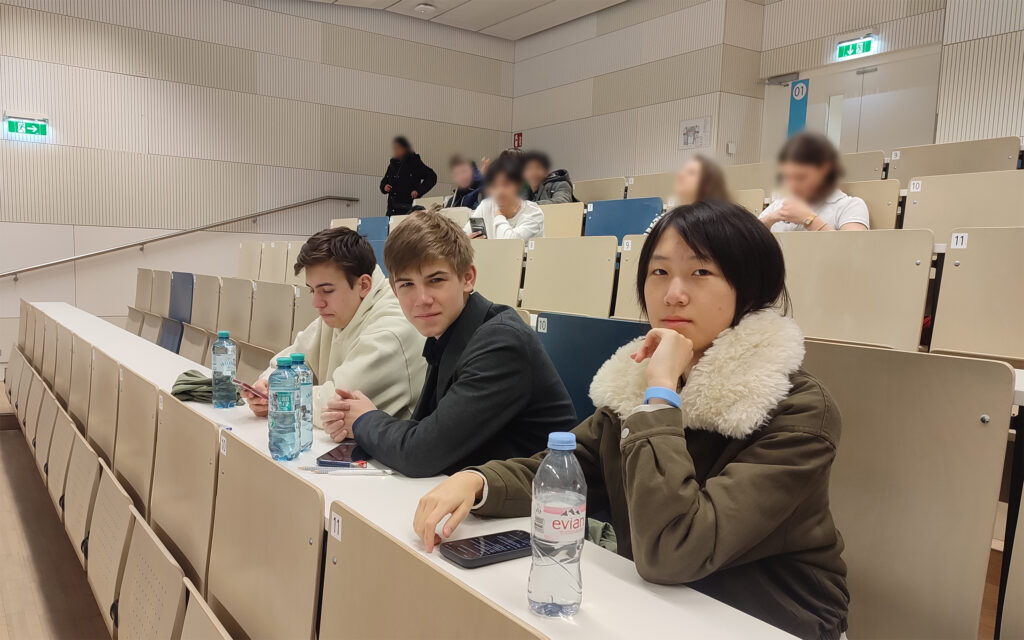
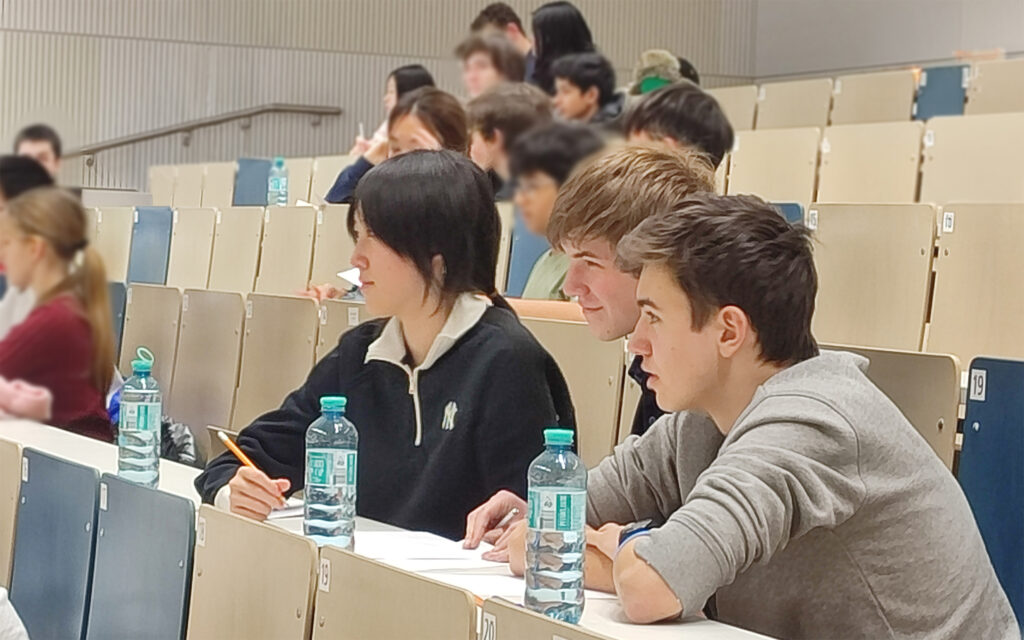
The next morning brought six intense rounds of individual competition followed by six rounds of team challenges. Our students tackled complex problems with confidence and creativity, supporting one another and demonstrating strong mathematical thinking. That evening, the city welcomed us with beautiful sights, delicious food, and animated conversations that somehow always circled back to mathematics. The combination of individual and team rounds allowed students to experience different aspects of mathematical thinking. Individual challenges require concentration, independence and the confidence to make decisions under time pressure. Team challenges introduce another dimension, encouraging participants to explain their reasoning, listen to alternative approaches and work towards a shared solution. These skills are valuable far beyond mathematics. Being able to communicate an idea clearly, consider another person’s perspective and adapt a strategy when new information becomes available are important qualities in many areas of learning. Competitions provide a practical environment in which students can develop these abilities while engaging with problems that stimulate their curiosity.
Mathematics is sometimes associated with memorising procedures and applying familiar formulas. However, meaningful mathematical understanding also involves recognising patterns, making connections and exploring why a particular method works. Unfamiliar competition problems can encourage students to move beyond routine exercises and think more creatively about the knowledge they already possess. We want our students to develop confidence in their ability to reason, investigate and persevere. A challenging question can become an opportunity to discover a new approach, even when the answer is not immediately apparent. Learning to remain engaged with difficult problems helps young people understand that progress often comes through exploration, reflection and a willingness to try again.
Encouraging Individual Mathematical Potential
Every student approaches mathematics with different experiences, interests and strengths. Some enjoy the precision of logical reasoning, while others are particularly motivated by patterns, puzzles or practical applications. Recognising these differences is an important part of helping young people develop their individual potential. Our educational philosophy places value on understanding what motivates each learner and encouraging them to pursue meaningful challenges. For students with a strong interest in mathematics, competitions can provide an opportunity to extend their thinking beyond familiar classroom exercises and encounter new ways of approaching problems. Such experiences can also help students develop a more personal relationship with learning. Rather than focusing exclusively on marks or examination results, they begin to appreciate the satisfaction of investigating a difficult question, discovering an unexpected connection or finding a solution through persistence.
Of course, not every mathematical challenge leads to immediate success. Students may encounter questions they cannot solve or approaches that do not work as expected. These moments are valuable because they encourage reflection and adaptability. Understanding why an idea was unsuccessful can be just as important as recognising why another strategy worked. Our ambition is to help young people see their abilities as something they can continue developing through curiosity, effort and appropriate support. By encouraging students to explore their interests and take on new challenges, we aim to nurture both academic confidence and a lasting enthusiasm for learning.
The Final Challenge
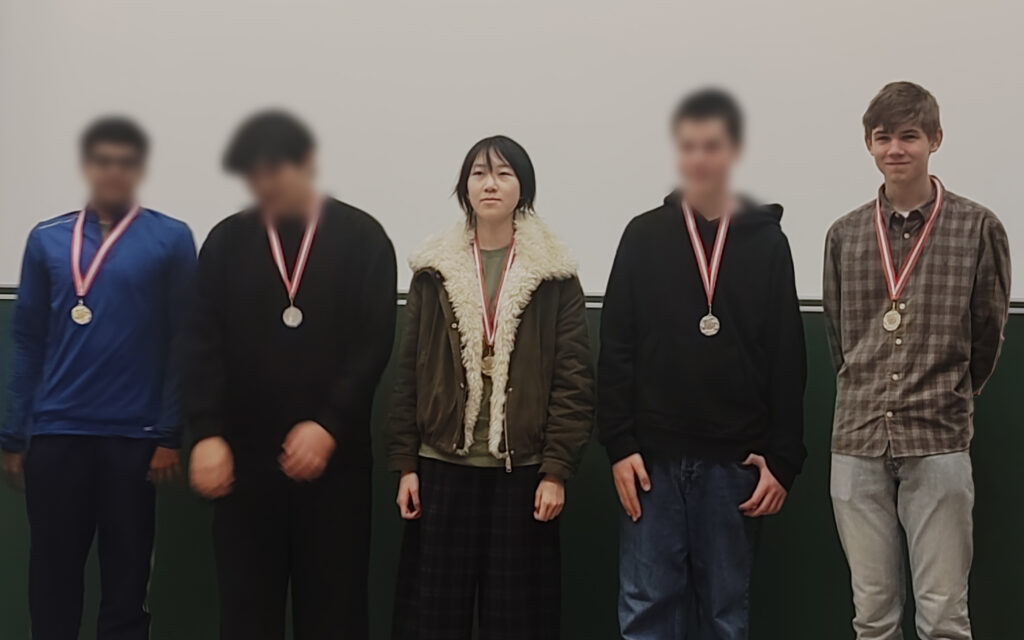
Sunday’s mixed-team mathematical city challenge added one final thrill. Students raced through the streets solving riddles, navigating routes, and thinking under pressure. We are especially proud that our students Ivan and Seanna placed first with their team, an achievement that reflects both their skill and teamwork.
The mathematical city challenge offered a particularly engaging way to connect problem-solving with a real environment. Moving through an unfamiliar city while interpreting clues and navigating routes requires participants to combine logical thinking with observation, communication and quick decision-making. It demonstrates that mathematical reasoning is not confined to textbooks or examination papers. Working in mixed teams also creates opportunities for students to collaborate with peers beyond their usual school groups. This encourages them to communicate clearly, contribute their own ideas and remain open to different perspectives. The ability to work constructively with new people is an important part of developing confidence and independence in an international environment.
Ivan and Seanna’s first-place finish is a wonderful achievement and a moment of pride for our school community. It celebrates their mathematical abilities while also recognising the value of collaboration. Their success demonstrates how individual strengths can contribute to a shared result when students combine their ideas and work towards a common goal. We are equally proud of the determination shown by all our participants throughout the competition. Taking part in an event of this nature requires courage, preparation and a willingness to challenge oneself. Every student can take something valuable from the experience, whether that is a new mathematical strategy, greater confidence or a stronger appreciation for teamwork.
Learning Through International Experiences
An international mathematics competition offers educational benefits that extend beyond the challenges themselves. Travelling to another country allows students to experience a different environment, interact with people from other schools and develop greater independence. These encounters can encourage curiosity about the wider world and help young people become more comfortable in unfamiliar situations.
For students at La Garenne, such experiences complement the international character of everyday school life. Learning alongside peers from different backgrounds encourages openness and respect, while shared academic interests can create connections across languages and cultures. Mathematics provides a particularly interesting meeting point because students can explore common ideas even when their experiences and approaches differ.
The time spent outside the competition is also valuable. Exploring a city, sharing meals and discussing the day’s challenges create opportunities for friendships to develop naturally. These moments remind us that education includes the relationships and experiences that shape how young people understand themselves and others. We believe that meaningful personal development involves a balance between support and challenge. Students benefit from feeling secure within a caring school community while also being encouraged to step beyond familiar routines. International experiences can provide this balance, offering opportunities to practise responsibility, adaptability and confidence in a supportive setting.
Celebrating Progress, Not Only Results
Competitions naturally encourage students to aim high, and achievements such as Ivan and Seanna’s first-place finish deserve recognition. However, the value of participating cannot be measured only by rankings or prizes. The preparation, effort and personal progress involved are equally important parts of the experience. For one student, success might mean solving a particularly difficult problem independently. For another, it could involve gaining the confidence to explain an idea to a team or remaining focused despite an unfamiliar challenge. Recognising these individual milestones helps students understand that meaningful achievement can take many different forms. This approach reflects our commitment to developing the whole person. Academic ambition is important, but so are perseverance, curiosity, collaboration and the ability to respond constructively when things do not go as planned. By celebrating these qualities alongside competition results, we encourage students to develop a healthier and more lasting relationship with achievement.
The lessons learned through a mathematics competition can continue to influence students long after the event has finished. They may approach classroom challenges with greater confidence, become more willing to share their reasoning or discover a deeper interest in mathematical exploration. These developments are important because they help turn a memorable experience into an opportunity for continued growth.
Conclusion
This trip was far more than a competition. It was a story of perseverance, curiosity, friendship, and growth. We, teachers and students, are already committed to returning next year, aiming higher and striving for even greater results.
The experience in Vienna captures so much of what we value at La Garenne: curiosity, determination, meaningful relationships and the confidence to embrace challenges. From unexpected travel difficulties to demanding mathematical problems and the excitement of the final city challenge, our students demonstrated that learning often happens in the moments when we are encouraged to think differently and work together.
We hope that the memories, friendships and lessons from this competition will continue to inspire our young mathematicians. Their journey reminds us that education is not simply about reaching a destination or achieving a result, but about discovering new abilities, developing character and finding the courage to take on the next challenge.
Key Takeaways
- Students participated in the ISMTF Maths Competition for the second consecutive year, showcasing their determination despite challenges.
- The journey began with a delayed flight and a broken train, yet students remained positive and resilient throughout.
- Six rounds of individual and team challenges tested students’ mathematical skills and teamwork under pressure.
- The trip included exploring the city and culminated in Ivan and Seanna winning first place in the mixed-team challenge.
- Overall, the experience fostered growth, friendship, and a shared commitment to return for next year’s competition.