
How Language Supports Learning, Well-being and Belonging
Estimated reading time: 6 minutes
In an international school setting, language is more than just a subject on the timetable. It is the foundation upon which learning, well-being, belonging, identity and connection are built.
Language in an International School Community
In a prestigious international setting such as La Garenne International School, where pupils arrive from all around the world and often access the curriculum in a language different from their mother tongue, language development becomes central to both academic success and personal growth. It is also essential to equity, achievement and curriculum access across all programmes. La Garenne is a truly unique setting, with a vibrant mélange of native, bilingual, trilingual and fluent speakers of a wide array of languages. Multiculturalism defines the school, and a stroll through the corridors may bring snippets of conversation in languages ranging from Arabic and Spanish to Russian and Portuguese.

Language as the Engine of Learning
From the earliest years, language shapes how children think. Research consistently shows that language development is closely linked to cognitive growth, influencing memory, reasoning and problem-solving. Children do not simply learn language; they learn through language. Whether exploring mathematical concepts, interpreting literature or engaging in scientific inquiry, pupils rely on language to process and articulate their ideas. In early childhood, this process is especially rapid and profound. The first years of life are often described as a particularly sensitive period for language acquisition, when the brain is highly receptive to sounds, patterns and vocabulary. For schools offering nursery and early years provision, this represents both an opportunity and a responsibility: to create rich, language-filled environments that stimulate curiosity and communication.
Building Social and Emotional Confidence
Language is also the key to human connection. Through words, children learn to express needs, share emotions and build relationships. Strong language skills are directly linked to social confidence, emotional well-being and a sense of belonging. In a boarding school environment, this becomes even more significant. Pupils live, learn and socialise together, often in a second or third language. The ability to communicate effectively helps students form friendships, navigate cultural differences and participate fully in school life. For international pupils, acquiring English, or strengthening existing English skills, opens doors not only academically but also socially. It allows them to engage in classroom discussions, extracurricular activities and everyday interactions with greater independence and confidence.
The Multilingual Advantage
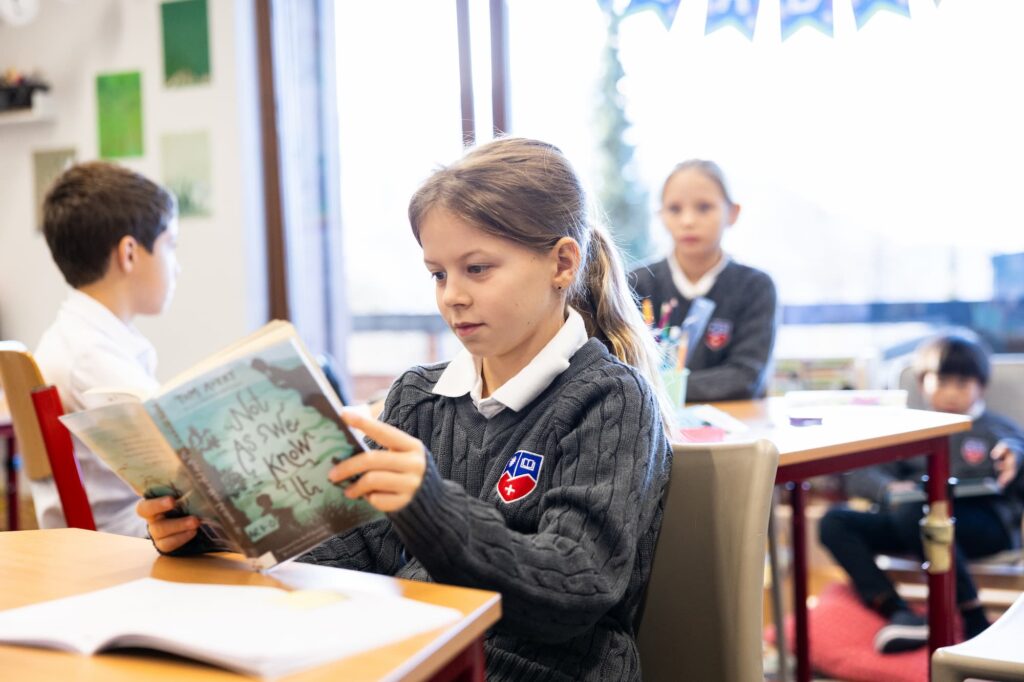
One of the defining features of international education is multilingualism. Far from being a challenge, learning multiple languages offers significant cognitive and cultural benefits. Studies suggest that bilingual and multilingual learners often demonstrate greater cognitive flexibility, improved attention control and enhanced problem-solving abilities. At La Garenne International School, where many students speak several languages, language development becomes a shared journey. English may serve as the common academic language, but pupils bring with them a rich tapestry of linguistic backgrounds. When schools value and nurture this diversity, they support language acquisition while also cultivating global citizenship.
The Role of Environment and Interaction
Language development does not happen in isolation; it is shaped by interaction. Conversations with teachers, storytelling, reading and collaborative learning all play a vital role. Frequent exposure to rich vocabulary and meaningful dialogue significantly enhances language outcomes. Research also highlights that early language experiences have a lasting impact. Children who are immersed in language-rich environments tend to develop stronger vocabularies and communication skills, which in turn support later academic achievement. For educators, this reinforces the importance of intentional practice: encouraging discussion, asking open-ended questions and creating opportunities for students to articulate their thinking. In boarding schools, language development extends beyond the classroom to include mealtimes, extracurricular activities and daily interactions, where communication continues to develop naturally.
Language and Academic Success
The link between language and academic performance is clear. Language skills underpin literacy, which in turn affects achievement across all subjects. Pupils with strong language foundations are better equipped to understand complex texts, write analytically and engage critically with content. Conversely, gaps in language development can create significant barriers to learning. This is particularly relevant in international settings, where students may be learning both subject content and the language of instruction at the same time. Supporting language development, therefore, is not an “add-on”; it is essential to ensuring equity and access.
A Modern Challenge: Language in a Digital World
In today’s digital age, language development faces new challenges. While technology can support learning, excessive passive screen time has been associated with weaker vocabulary and communication skills in young children. The key is balance: ensuring that digital tools complement, rather than replace, real human interaction. For schools and families alike, this means prioritising conversation, reading and shared experiences. Language grows through interaction, not isolation.
The Role of Schools and Families
Effective language development is a partnership. Schools provide structure, expertise and immersive environments, while families offer continuity and reinforcement. Activities such as reading aloud, storytelling and everyday conversation all contribute to building strong language skills. In an international boarding context, schools often take on an even greater role, acting as both educators and linguistic environments. The most successful institutions recognise this and embed language development across all aspects of school life.
Looking Ahead
As education continues to globalise, the importance of language development will only increase. It is the thread that connects disciplines, cultures and individuals. For pupils at La Garenne, language is not just about learning English or mastering grammar; it is about unlocking potential, building confidence and preparing for a global future. In the long run, language is power: the power to think, the power to connect and the power to succeed. By nurturing that power, schools play one of the most important roles of all.
Key Takeaways
- In an international school like La Garenne, language is essential for learning, belonging, and connection.
- Language development influences cognitive growth, social confidence, and emotional well-being, especially in early childhood.
- Multilingualism offers cognitive and cultural advantages, supporting diverse backgrounds and global citizenship.
- Interaction, storytelling, and collaboration are vital for language development, influencing academic success.
- Schools and families must work together to create rich language environments, preparing students for a global future.